

The FBI and CIA are two of the most well-known intelligence agencies in the United States. Many people confuse their roles, assuming they do similar work.
In truth, these agencies have very different missions and legal powers. This article explains the main differences so you can clearly understand what each one does.



Origins and Historical Background
Understanding how each agency was created helps explain their purpose today. Both were formed to handle serious threats, but in very different ways.
The FBI was established in 1908 as the investigative arm of the Department of Justice. It evolved into the main federal agency for enforcing laws across the U.S.
The CIA was founded in 1947, after World War II, under the National Security Act. Its creation addressed the need for a centralized foreign intelligence body.
Core Mission and Jurisdiction
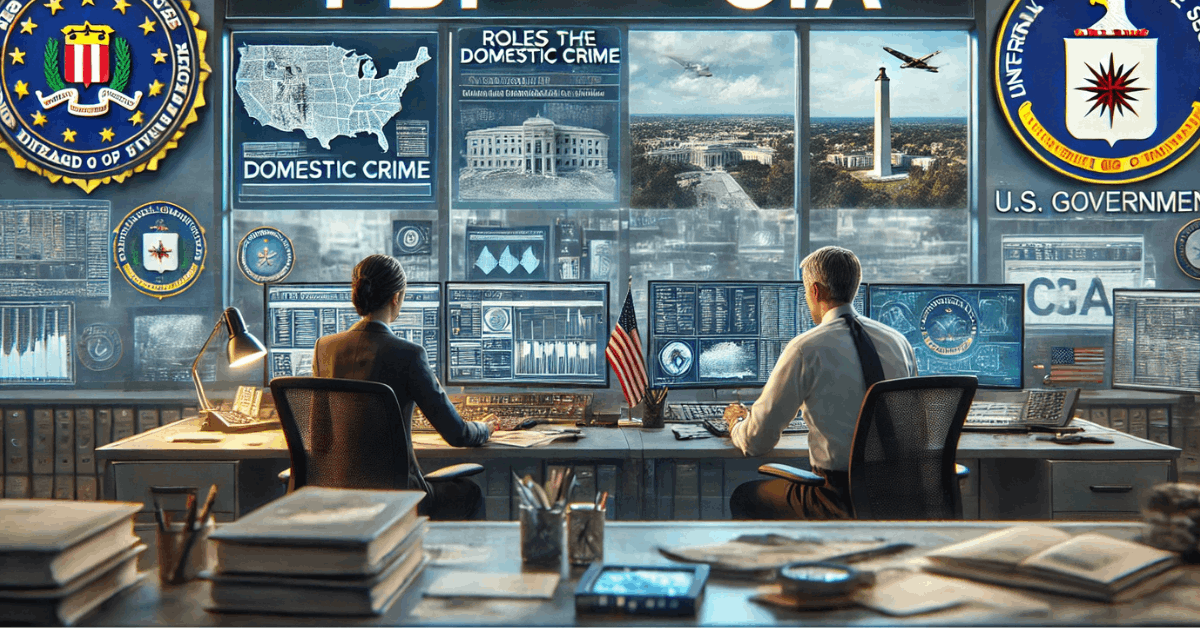
These agencies have distinct missions and areas of operation. Their roles do not overlap, even if they sometimes collaborate.
The federal bureau handles operations inside the U.S., focusing on crime investigations, intelligence gathering, and domestic threats. It enforces federal laws and conducts arrests nationwide.
The foreign agency works outside the country, collecting intelligence on external threats. It lacks law enforcement authority and cannot perform arrests.
Types of Cases and Responsibilities
Each handles a unique set of threats and priorities. Their case types reflect their legal scope and strategic focus.
- The domestic agency investigates complex cases that threaten public safety and federal interests, such as terrorism, cybercrime, espionage, public corruption, and major financial fraud.
- It is also responsible for pursuing sensitive cases involving child exploitation, civil rights violations, and other high-impact crimes within U.S. jurisdiction.
- The foreign service gathers critical intelligence on matters concerning foreign governments, international terror networks, and unstable global political environments.
- Its mission includes providing early warnings, strategic reports, and security assessments that help prevent foreign threats from affecting national interests.
- The domestic agency prioritizes building cases with evidence that leads to legal charges, arrests, and successful prosecutions in court.
- The foreign service concentrates on producing valuable insights that influence policy decisions and support long-term national security strategies.
Organizational Structure and Oversight
How they are structured and who they report to shows their chain of command. These setups affect how they operate and who checks their actions.
The federal investigative body is part of the Department of Justice and reports to the Attorney General. Its director is appointed by the President and confirmed by the Senate.
The intelligence agency falls under the Office of the Director of National Intelligence. Its director is also appointed by the President, but has a different reporting structure tied to national security.
Methods and Tools Used
Each uses different tools and techniques to fulfill its mission. Their operations are tailored to the laws and regions they cover.
The domestic branch uses surveillance, forensic science, undercover agents, and digital tracking. Its evidence must stand up in court.
The international arm employs satellite monitoring, human informants, cyber tools, and covert missions. Most of its operations are secret and not used for legal prosecution.
Collaboration and Conflict
Although their missions differ, collaboration is essential at times. National security often requires information sharing between them.
They work jointly on counterterrorism, foreign espionage, and cyber defense. Joint Terrorism Task Forces (JTTFs) help them coordinate efforts domestically.
After 9/11, reforms improved communication and reduced gaps. Today, systems are in place for better data exchange.
5 Key Differences Between the FBI and the CIA
This section clearly outlines the five biggest differences between these agencies. These differences define their purpose, tools, and public roles.
Jurisdiction
One operates primarily within U.S. borders, focusing on federal law enforcement. It has full arrest powers and legal authority across all states.
The other works almost exclusively outside the U.S. and cannot carry out operations within the country unless authorized.
Its role is to understand foreign threats, not handle criminal cases.
Mission
One aims to enforce U.S. laws, prevent terrorism, and investigate serious crimes within the country. It ensures national security from the inside.
The counterpart collects and analyzes data about foreign governments, events, and movements. Its goal is to prevent global threats and guide policymakers.
Authority
The domestic branch operates under the Department of Justice and follows the U.S. legal system. It runs investigations that lead to trials and prosecutions.
The intelligence wing reports to the Director of National Intelligence and performs covert operations. It doesn’t arrest suspects or prosecute them.
Methods
One relies on warrants, interviews, lab results, and public testimony. Its work must be admissible in court.
The other gathers intelligence through spying, informants, secret operations, and data monitoring.
Its tasks are built to remain hidden and serve foreign intelligence needs.
Accountability
The domestic agency is subject to public oversight through courts, Congress, and internal audits. Its agents may be subpoenaed, and cases are often public.
The other is monitored via classified briefings, congressional committees, and executive review. Much of its activity is shielded from public view.
Common Misconceptions
Many people believe the two agencies do the same things. These bullet points clear up the biggest misconceptions about their powers and roles.
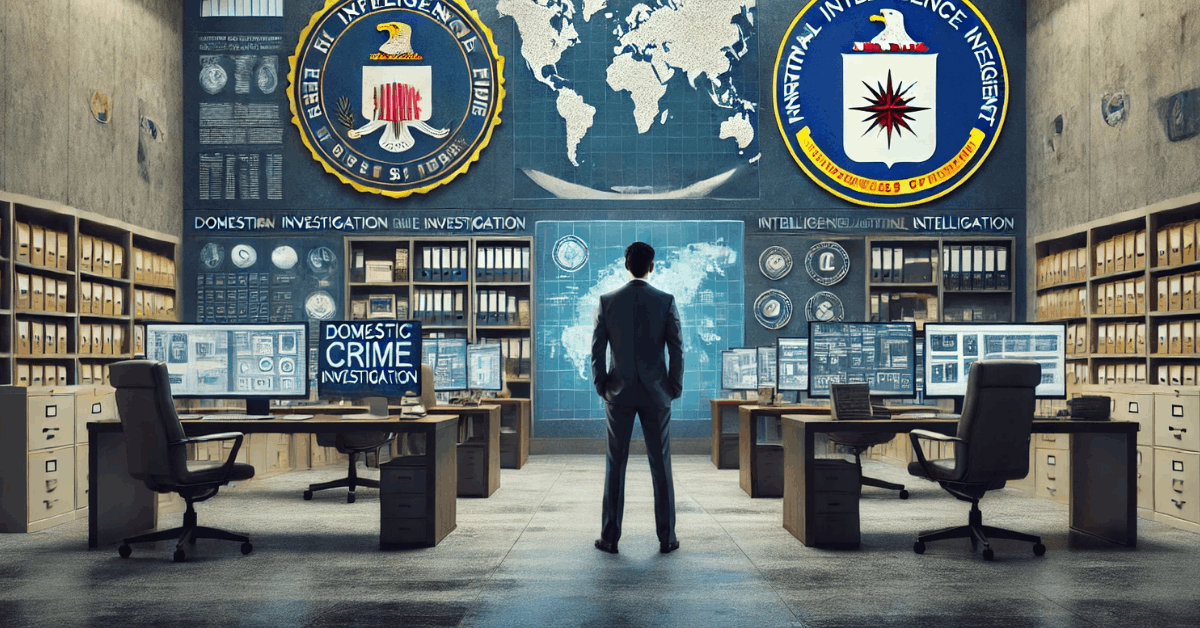
- The foreign agency does not arrest people, and it is not authorized to participate in any domestic criminal investigations, regardless of threat level.
- It cannot spy on U.S. citizens, and any such action requires a high-level legal process and formal government approval.
- The domestic counterpart does not manage overseas covert operations, even if it cooperates with other agencies on international matters.
- It has no authority to perform foreign espionage or conduct unauthorized surveillance outside of U.S. borders.
- Many misunderstandings result from inaccurate portrayals in TV shows, films, and entertainment media that blur the lines between the two roles.
- In reality, each agency operates under well-defined legal frameworks and follows strict operational boundaries enforced by oversight bodies.
Final Thoughts: Why the Differences Matter?
The federal agency protects the U.S. from domestic threats. The foreign agency prevents external dangers before they reach American soil.
Their missions are separate but both are vital to national security. Knowing the difference helps you understand how the U.S. stays protected from multiple sides.