

Many people have heard the claim that the Great Wall of China is visible from space. This idea has circulated in books, documentaries, and even classrooms.
But is there any truth to it? In this article, you'll learn what astronauts, scientists, and facts say about this widespread myth.



The Myth's Origin and Popularity
This belief didn’t start with space exploration. It began long before satellites or manned spaceflights existed.
The myth likely came from assumptions about the wall's massive length. It was picked up by textbooks and pop culture without proper validation.
Writers and educators repeated it without evidence. Eventually, professionals in space science started setting the record straight.
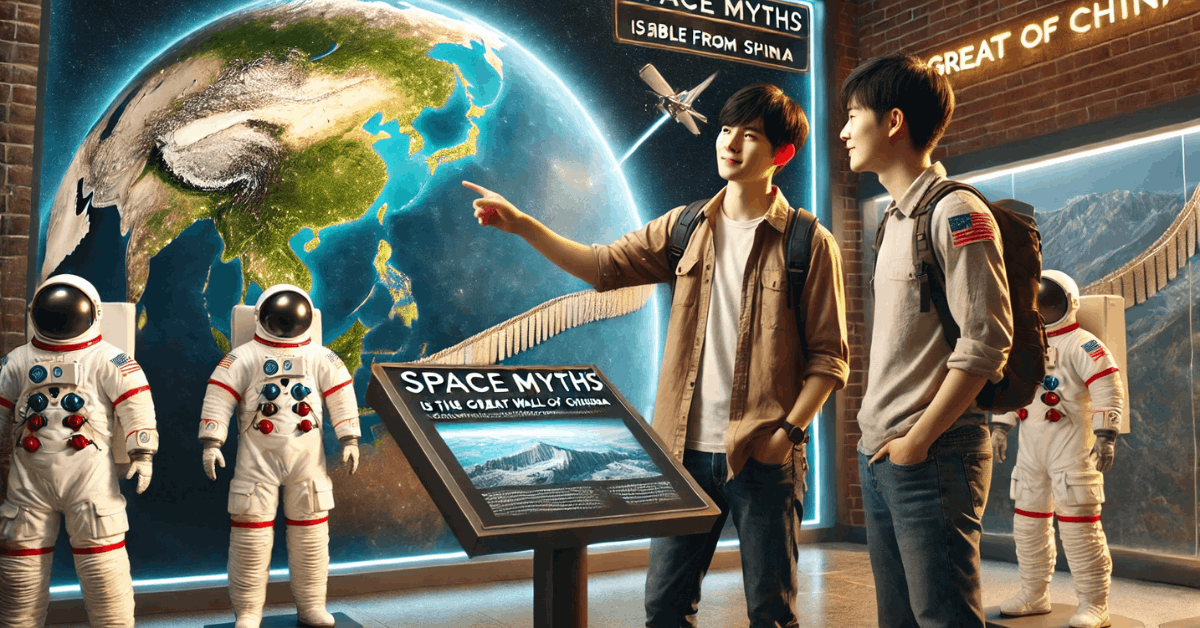
Understanding What "Visible from Space" Means
This phrase is often misunderstood. People usually mean visible to the naked eye from low Earth orbit (LEO). LEO ranges from 160 to 2,000 kilometers above the Earth.
From that height, visibility depends on size, color contrast, and conditions. Objects like the Great Wall don’t stand out. Human vision has limits at that distance.
Materials and Construction of the Great Wall
The wall’s materials are key to understanding why it blends into the landscape. It was built mostly from stone, wood, earth, and brick, which match the natural surroundings.
These colors don’t provide enough contrast from high altitudes. Also, it’s not a single unbroken line.
The wall is made up of sections, many of which are ruined or eroded. This fragmented structure reduces its visibility even further.
Location and Terrain Around the Wall
The Great Wall winds through mountains, valleys, and grasslands. These varied landscapes affect how it interacts with light and shadow.
Its surroundings often mask it, especially from high above. Unlike structures built in open or flat areas, the Wall blends with its environment.
Dense vegetation or rugged terrain can obscure parts of it completely. This makes detection harder even when using telescopic lenses.
Visibility of the Great Wall from Orbit
You might expect the Great Wall to be easy to spot. But astronauts consistently report the opposite.
Its materials blend with the environment. The wall’s width is only 5 to 9 meters, too narrow to see unaided.
Chinese astronaut Yang Liwei and NASA confirmed this. Even major highways can be hard to find without zoom lenses.
How Human Eyes Work in Space?
Your eyes rely on contrast, light, and scale to identify objects. In space, these factors change. The Earth’s curvature, glare, and motion complicate perception.
The pupil can’t adjust fast enough to track small surface details. Objects that blend in are missed. That’s why most astronauts rely on instrumental assistance.
Technology Makes a Difference in Space Viewing
Cameras, telescopes, and satellite sensors detect more than human eyes. They use zoom or filters to enhance views.
Images of the Wall are often from high-resolution satellites. That doesn’t mean people can see it directly.
There’s a big gap between optical tools and natural vision. Separate visual aids from naked-eye observations.
What Satellite Imagery Really Shows?
Satellites use tools beyond human sight. They detect infrared, thermal, and multispectral data.
These technologies allow precise imaging of structures invisible to the naked eye. Images claiming to show the Wall are taken with targeted filters and zoom.
This leads to the false assumption that astronauts can see the same thing. Satellite visuals and human vision operate very differently.
What Can Be Seen from Space Instead?
Below are common examples astronauts have identified that you may recognize from satellite imagery or documented space observations:
- Cities at night – Their artificial lighting systems create bright, structured grids that are very easy to distinguish from orbit.
- Airport runways and large highways – These extended, flat, paved surfaces stand out due to their reflectivity and uniform construction.
- Greenhouses in deserts – These installations often have shiny, reflective rooftops and are arranged in large organized blocks, making them clearly visible.
- Bridges and large roads – When lighting conditions are ideal, these straight and engineered lines cut through landscapes and appear clearly.
- Snow-covered landscapes and farmland – The consistent brightness of snow and the patterned layout of farmland enhance visibility from high altitudes.
Why Visual Illusions in Space Are Common?
Space introduces many variables that lead to optical illusions. Light reflection off clouds or terrain can confuse observers.
Depending on angles and sunlight, objects may appear larger, smaller, or misplaced. Astronauts are trained to manage depth perception issues.
Without familiar reference points, it’s easy to misjudge size and shape. These conditions help explain why myths like the Great Wall's visibility persist.
Misquoted Astronauts and Misleading Media
Some myths are based on misinterpreted quotes. Early astronauts were sometimes vague or speculative.
Media outlets repeated these comments without context. Over time, the statements became "evidence" supporting the myth.
This highlights how important accurate reporting is in science topics. Misquotes can fuel long-lasting misinformation.
Why the Great Wall Still Captures Imagination?
The wall is long, historic, and symbolically powerful. People want to believe it’s unique enough to be seen from space. It adds romanticism to human history.
But that desire doesn’t match reality. Facts always matter more than myths. It’s better to appreciate the Wall from Earth.
Other Space Myths Worth Debunking
There are other space myths that confuse people. These often spread through media and social platforms. Here are a few common ones:
Myth 1: People Float in Space Because There's No Gravity
This is incorrect. Gravity exists in space, especially near Earth. Astronauts float due to microgravity, not absence of gravity. It’s caused by constant freefall.
Myth 2: The Moon Has a Permanent Dark Side
The Moon is tidally locked, so one side always faces Earth. But both sides get sunlight during rotation. There is no eternal darkness.
Myth 3: Space Is Completely Silent
Space has no air, so sound doesn’t travel like on Earth. But radio and electromagnetic waves can move. Instruments detect signals, but you can’t hear them directly.
Myth 4: NASA Has Lost the Technology to Return to the Moon
This is false. NASA stopped Moon missions for budget and political reasons. Programs like Artemis are bringing humans back with new systems.
Myth 5: Spacecraft Travel in Straight Lines
They follow orbital paths, not straight lines. Gravity shapes these curves. It’s about efficient routes that save fuel.
Conclusion: Myth Busted, Facts Clear
The Great Wall of China is not visible to the naked eye from space. Astronauts confirmed this many times.
The myth confuses normal eyesight with camera-enhanced images. Always rely on facts from trusted sources.