

For centuries, the Egyptian pyramids have captured the imagination of people worldwide.
While much has been uncovered, researchers still believe hidden chambers may exist deep within their walls.


New clues are emerging thanks to modern technology, raising fresh questions about what secrets remain buried inside.
Overview of the Pyramids' Structure
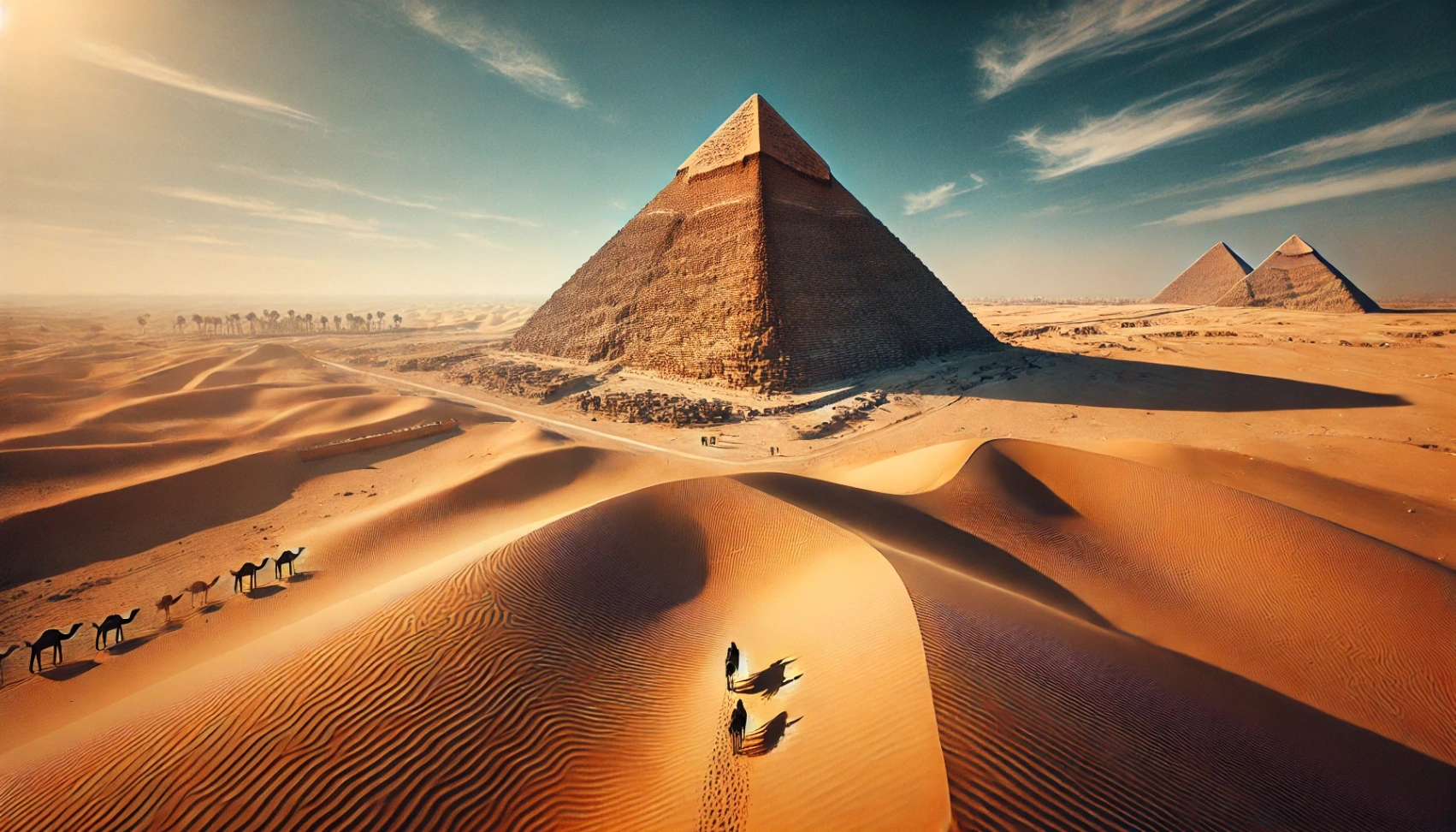
The Great Pyramid of Giza, built for Pharaoh Khufu, is the largest and most studied Egyptian pyramid.
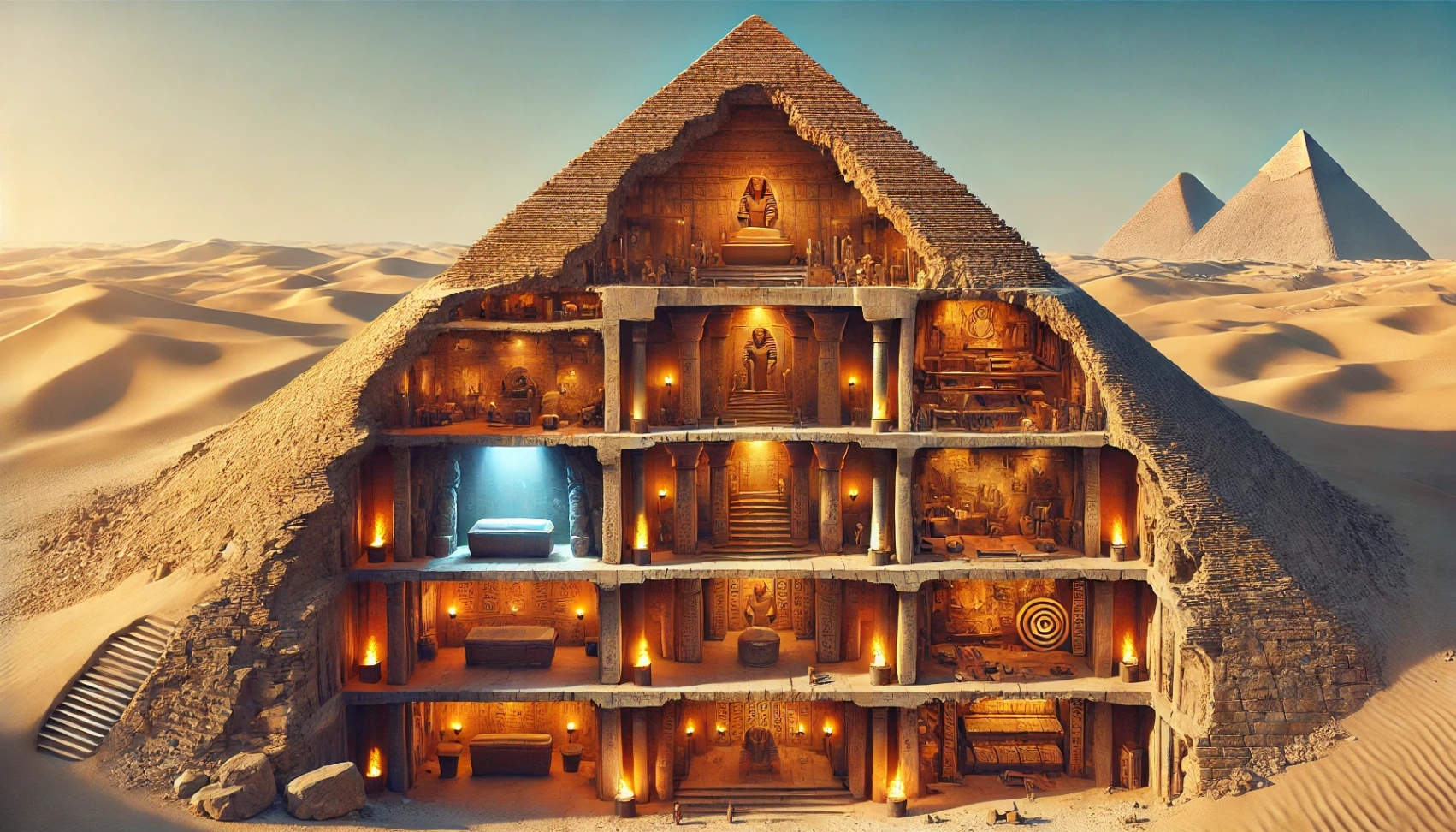
It contains the King's Chamber, Queen's Chamber, Grand Gallery, and several narrow shafts, with most passageways aligned precisely.
Unlike later pyramids, Khufu’s design is more complex and includes internal spaces not found in simpler, solid-core pyramids like those of Khafre and Menkaure.
History of Internal Discoveries
Over the years, researchers have made several key finds inside the pyramids, offering clues about hidden spaces. Here's a quick overview:
- 820 AD – Al-Ma'mun’s Entry: Caliph Al-Ma'mun entered the Great Pyramid and found the Grand Gallery and King's Chamber.
- 19th Century – Mapping Begins: Caviglia and Vyse mapped internal chambers, including the Queen's Chamber.
- 20th Century – Shaft Studies: Experts found narrow shafts leading from the chambers, possibly for air or rituals.
- 1993 – Gantenbrink’s Door: A robot found a small stone door with copper handles in the Queen’s Chamber shaft.
- 2002 – Second Door Found: A second sealed door was discovered behind the first using a robotic camera.
- 2011–2013 – New Scans: Imaging and robots were used again, but no major updates were shared.
Modern Technology in Pyramid Research
Researchers now rely on advanced, non-invasive tools to explore the pyramids without damaging them.
These methods help detect hidden spaces and structural features deep within the stone:
- Muon Radiography: Uses cosmic rays to scan the pyramid’s interior and detect empty spaces or voids.
- Ground-penetrating Radar (GPR): Sends radio waves into the structure to reveal changes in density or hidden gaps.
- Infrared Thermography: Captures heat variations on the pyramid’s surface, which can indicate hollow areas.
- 3D Modeling and Simulation: Creates accurate digital reconstructions to test structural theories and plan future investigations.
The 2017 “Big Void” Discovery
In 2017, the ScanPyramids project revealed a major hidden space inside the Great Pyramid of Giza.
Using modern scans, they found a large unexplored void. Here's what was uncovered:
- Detection Method: Muon radiography, which uses cosmic-ray particles, helped scan the pyramid without digging.
- Location: The void sits above the Grand Gallery inside the pyramid.
- Size: It stretches at least 30 meters long, with a cross-section similar to the Grand Gallery.
- Confirmation: Three separate teams confirmed the void using different muon detectors.
- Purpose: Its use is still unknown—some say it's structural, others think it could be a hidden room.
Other Recent Void Detections
Researchers have continued to uncover new voids in and around the Great Pyramid using non-invasive tech. Here are the key findings:
- North Face Corridor (2023): Found using muon scans; about 9m long and 2m wide; may lead to other spaces.
- Western Cemetery Anomaly (2024): Detected under sand with GPR; L-shaped; could be a hidden tomb or shaft.
- Small Cavity Near Queen’s Chamber: Infrared scans showed heat anomalies, which may indicate a small void or shaft.
- Anomalies Near the Pyramid Base: GPR revealed density changes; size unknown; further study pending.
- Possible Void Above King’s Chamber: Muon data hints at more space above the known chamber; unconfirmed.
- Unexplored Shafts with Blocked Ends: Narrow ducts end in sealed stones, which robots may explore in the future.
Why Some Chambers Are Still Hidden
Despite modern tools, many parts of the pyramids remain unexplored. Several factors make it hard to confirm or access possible hidden chambers:
- Structural Risks: Drilling or opening new areas could damage the pyramid’s stability.
- Limited Access: Some shafts are too narrow or sealed off for current tools to pass through.
- Preservation Rules: Egypt enforces strict laws to protect heritage sites from harm.
- Unclear Data: Scans sometimes show unclear or conflicting results, making it hard to confirm voids.
- Political and Cultural Sensitivity: Decisions about exploration involve national pride and religious respect.
Theories About Hidden Chambers
Experts have proposed several ideas about what hidden chambers inside the pyramids might be. These theories are based on both historical patterns and modern scan data:
- Undiscovered Burial Rooms: Some believe chambers may hold the actual burial site of Pharaoh Khufu.
- Storage for Ritual Objects: Hidden spaces might contain sacred items used in burial ceremonies.
- Structural Gaps: Some voids may only relieve weight and support the pyramid’s design.
- Symbolic Architecture: Chambers could have spiritual or symbolic purposes tied to ancient beliefs.
- Tombs of High Officials: Royal advisors or family members may have been buried in secret rooms.
Egyptian Government’s Role and Restrictions
The Egyptian government plays a central role in managing pyramid research.
It enforces strict rules to protect cultural heritage and control how studies are done:
- Permit Control: All exploration projects require government approval and oversight.
- Preservation First Policy: Projects that may risk structural damage are often denied or delayed.
- Limited Foreign Access: International teams must collaborate with local archaeologists and follow Egyptian protocols.
- Media and Data Restrictions: Public release of findings is often regulated to prevent misinformation.
- Cultural and Religious Sensitivity: Authorities are cautious about disturbing sacred or symbolic parts of the site.
Japanese Contributions to Pyramid Research
Japan has actively supported pyramid exploration through advanced technology and academic partnerships.
Here are key ways Japan has contributed to uncovering the pyramids’ secrets:
- Advanced Scanning Technology: Japanese teams helped develop and operate muon detectors used in the ScanPyramids project.
- University Collaborations: Institutions like Nagoya University partnered with Egyptian teams to analyze internal structures.
- Robotic Devices: Japanese engineers designed compact robots to explore narrow shafts and sealed areas.
- Data Analysis Support: Japanese researchers provided software and expertise for interpreting complex scan results.
- Public Engagement: Japan’s media and museums have promoted awareness of Egyptology through exhibitions and documentaries.
Myths vs. Facts: Popular Beliefs About Hidden Chambers
The mystery of the pyramids has inspired many beliefs—some based on science, others on speculation. Here's a breakdown of common myths versus verified facts:
Myth: The pyramids are full of secret treasure rooms.
- Fact: No treasure-filled hidden chambers have been confirmed inside the Great Pyramid.
Myth: Aliens built hidden chambers.
- Fact: Archaeological evidence credits ancient Egyptians with advanced construction skills and planning.
Myth: All chambers have already been discovered.
- Fact: Recent scans show there are still unknown spaces within the pyramids.
Myth: Hidden rooms are protected by curses.
- Fact: The “curse” idea is a modern myth; ancient texts don't mention supernatural traps.
Myth: The pyramids were tombs only.
- Fact: While built as tombs, the pyramids may have had symbolic or ceremonial roles too.
Final Takeaways
The pyramids of Egypt continue to hold mysteries, with hidden chambers still waiting to be confirmed or explored.
Thanks to modern technology and international cooperation, we’re closer than ever to uncovering what lies within.
Stay updated on discoveries and support credible research that brings ancient history to light.