

The idea that hair and nails grow after death is widely believed. Many people accept it without question.
But science tells a different story. This article breaks down what really happens to hair, nails, and skin after death.



The Origin of the Myth
The belief that hair and nails grow after death has been around for centuries. It appears in books, movies, and folklore. People observing dead bodies often misinterpret what they see.
Writers and media have helped keep the myth alive. Horror films and novels exaggerate death-related changes. These portrayals make viewers think hair and nails are still alive after death.
Visual changes in a corpse are real, but not caused by biological growth. People see exposed nails and hair due to skin retraction. Once explained, the illusion makes more sense.
What Really Happens After Death?
Once death occurs, the body shuts down completely. Cells stop receiving oxygen. Hair and nail growth depend on cells that divide and use nutrients.
Without circulation, this stops instantly. No energy means no mitosis. Dead hair and nail cells can’t regenerate.
Within hours, the body starts decomposing. This breaks down proteins in skin, follicles, and nail beds. There is no delayed cell function.
The Role of Dehydration and Skin Retraction
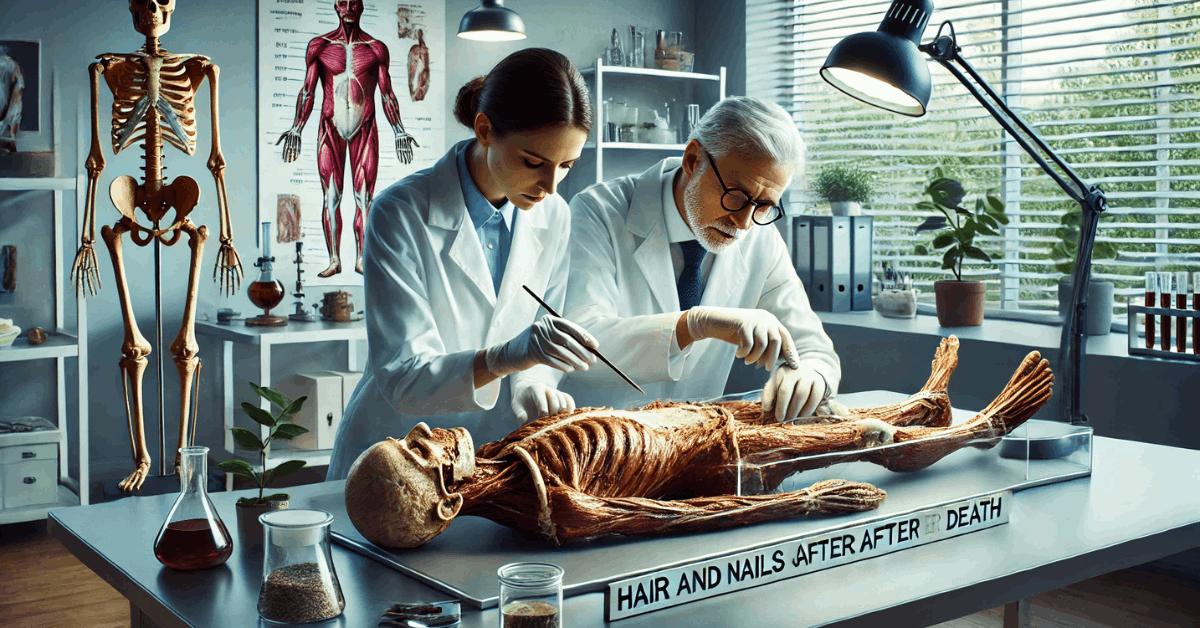
People confuse skin shrinkage with growth. After death, the body loses moisture rapidly. The skin dries and pulls back from nails and hair follicles.
This makes hair and nails seem longer. There’s no actual growth. Instead, skin retraction creates an optical illusion.
Even forensic professionals explain this to families. Understanding dehydration is key. The effect is about exposure, not growth.
What Happens to Hair Follicles and Nail Beds?
Hair and nails grow from cells in follicles and nail roots. These cells need a blood supply to stay active. After death, the supply cuts off.
Cell division halts and protein production ends. Hair strands and nails already present remain for a while. But nothing new is created.
Over time, tissue breaks down. Keratin structures remain intact longer, but they aren’t growing. Once cells die, function ends.
Timeframe of Postmortem Changes
Postmortem changes begin quickly. Within hours, the body cools and loses moisture. Rigor mortis sets in, and skin begins retracting.
Within 1–3 days, tissue breakdown increases. Bloating and gas buildup occur. Hair and nails appear more visible due to taut skin.
By day 3 to 5, signs of decomposition are clear. Skin changes color. Body tissues collapse, and keratin-based structures stay visible but do not grow.
Forensic and Medical Perspectives
Medical examiners often address this myth. Autopsies show no active growth. The focus is on body temperature and tissue state.
Forensic experts recognize optical illusions postmortem. They explain skin retraction as the cause. Without context, it creates confusion.
Science confirms there's no growth. Blood flow, energy, and hormones are needed. These are absent in death. Visual change is from postmortem processes.
Environmental Factors That Influence Appearance
Environmental conditions can make the body appear different after death. These factors impact how quickly the body changes. They also shape how visible hair and nails look.
- Temperature: Warmer conditions speed up decomposition and skin drying. This makes skin retraction happen faster, exposing more hair and nail.
- Humidity: High humidity delays drying. In these cases, the body may appear more intact longer, and skin might retract more slowly.
- Airflow: Ventilated environments help skin dry faster. This leads to quicker exposure of keratin structures like nails and hair.
- Burial Conditions: Bodies in sealed spaces, like coffins, change at a different pace. They may preserve moisture, slowing visual transformation.
- Light and Heat Exposure: Direct sunlight can cause rapid drying. This affects how quickly skin shrinks away from nails and follicles.
- Refrigeration or Cold Storage: Cold conditions slow down all postmortem changes. Skin retraction is minimal, reducing illusion of growth.
- Clothing and Wrapping: How a body is dressed or wrapped also affects moisture retention. This can delay the illusion of nail or hair length changes.
Embalming and Funeral Presentation
Embalming slows decomposition and preserves appearance. It doesn’t restart biological processes. Hair and nail length stay the same.
Funeral preparations may trim hair and nails. This affects how they appear to loved ones. Cosmetics and lighting may also create illusions.
Professionals aim to restore the natural appearance. They don’t alter growth. Their work focuses on preservation, not change.
Cultural Beliefs and Misinterpretations
Some cultures hold strong beliefs about the dead. These include stories about hair continuing to grow. Such traditions often emerge from misunderstandings.
Cultural practices may involve rituals that highlight hair or nails. This can reinforce the myth. Lack of medical context strengthens false ideas.
Education can help dispel myths respectfully. Recognizing cultural narratives is important. But facts must guide understanding.
Myths Vs. Scientific Reality – Summary Comparison
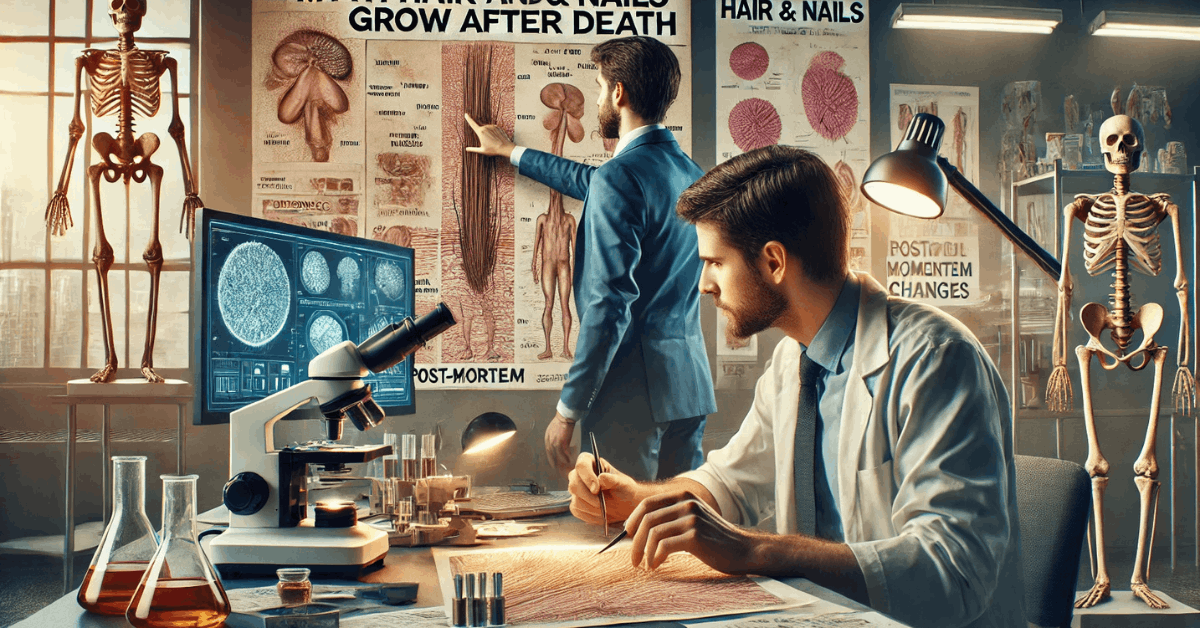
Some beliefs remain popular even without scientific backing. To help clarify, here’s how common myths stack up against facts:
- MYTH: Hair grows for days after death.
- FACT: Skin shrinkage makes it appear longer.
- MYTH: Nails grow because they look longer.
- FACT: Moisture loss pulls skin back, exposing more nail.
- MYTH: Cells keep dividing after death.
- FACT: Mitosis stops immediately due to a lack of oxygen.
- MYTH: Hair can grow in a sealed coffin.
- FACT: No biological activity happens once death occurs.
- MYTH: Forensic experts find signs of hair growth postmortem.
- FACT: Experts confirm no growth, only exposure from drying skin.
Related Post-Death Body Changes
Other body changes after death are often mistaken for mysterious activity. Understanding them removes fear and confusion. Here are the most common ones:
Skin Discoloration - Livor Mortis
Blood settles in the lower parts of the body. This causes purple or red patches. It’s a natural result of gravity and halted circulation.
Muscle Stiffness - Rigor Mortis
Muscles stiffen after death. This results from chemical changes in muscle fibers. It can make a body look tense.
Bloating and Gas Release
Decomposition releases gases. This causes bloating and movement. Stories often exaggerate this effect.
Skin Slippage
Layers of skin separate. This is part of tissue breakdown. It appears in late decomposition stages.
Final Truth: No Growth After Death
Hair and nails stop growing the moment death occurs. What appears as growth is caused by dehydration and skin retraction.
This process makes hair and nails look longer than they were. No biological growth happens after death.