
Leonardo da Vinci remains one of the most intriguing minds in history. His use of mirror writing has sparked questions for centuries. Many people wonder if he really did it, and if so, why?
This article breaks down what mirror writing is, why Leonardo used it, and what experts think today.



What Is Mirror Writing?
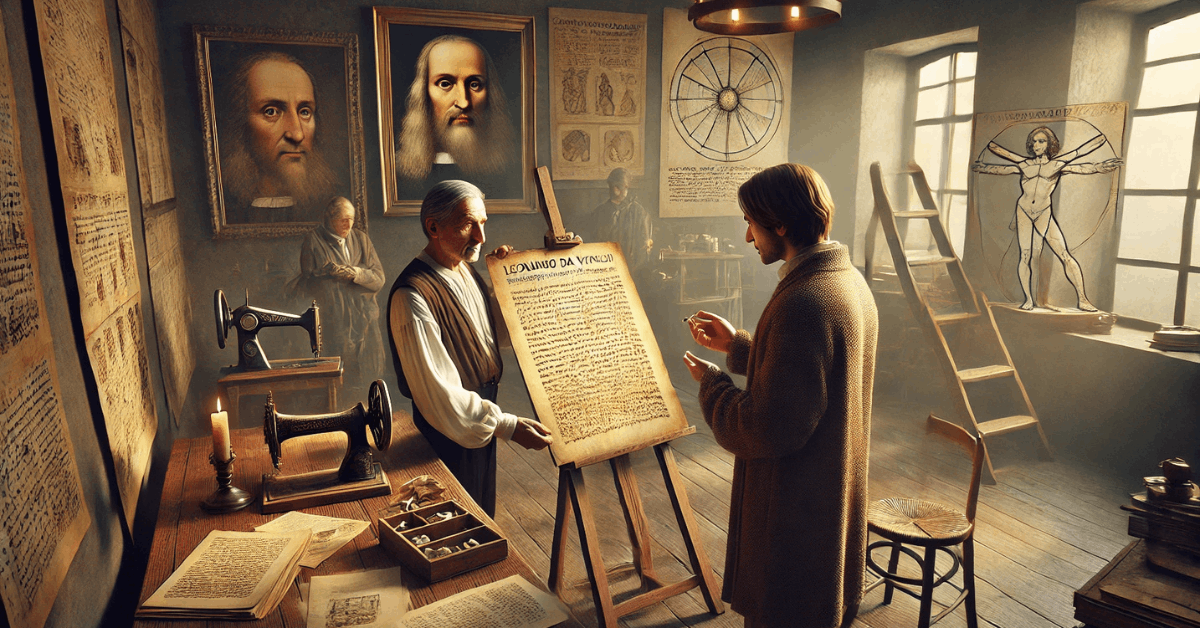
Mirror writing is a method where the text is written in reverse. When viewed in a mirror, it becomes readable. Leonardo da Vinci was known for using this style in most of his notebooks.
He flipped each letter backward and wrote from right to left. This technique wasn't random. It was consistent across many of his personal notes.
Scholars estimate up to 28,000 pages survive, many written this way. His use of this method wasn't a single instance—it was a habit.
Theories About Why He Did It
There are several possible explanations for Leonardo's mirror writing. Each one reflects different views on his personality, habits, and environment. Let's go through the most cited theories below.
Theory 1 – Hiding Ideas
One idea is that Leonardo was protecting his discoveries. He may have wanted to prevent others from stealing his work or misusing it. During his time, the Church had strict rules against certain scientific thoughts.
Mirror writing could have offered a form of protection. But experts argue this isn't strong enough to be the main reason. Mirror writing is easy to decode—it just requires a mirror.
So, while it may have offered mild secrecy, it wasn’t effective as a true code. Scholars believe this weakens the secrecy argument.
Theory 2 – Left-Handedness
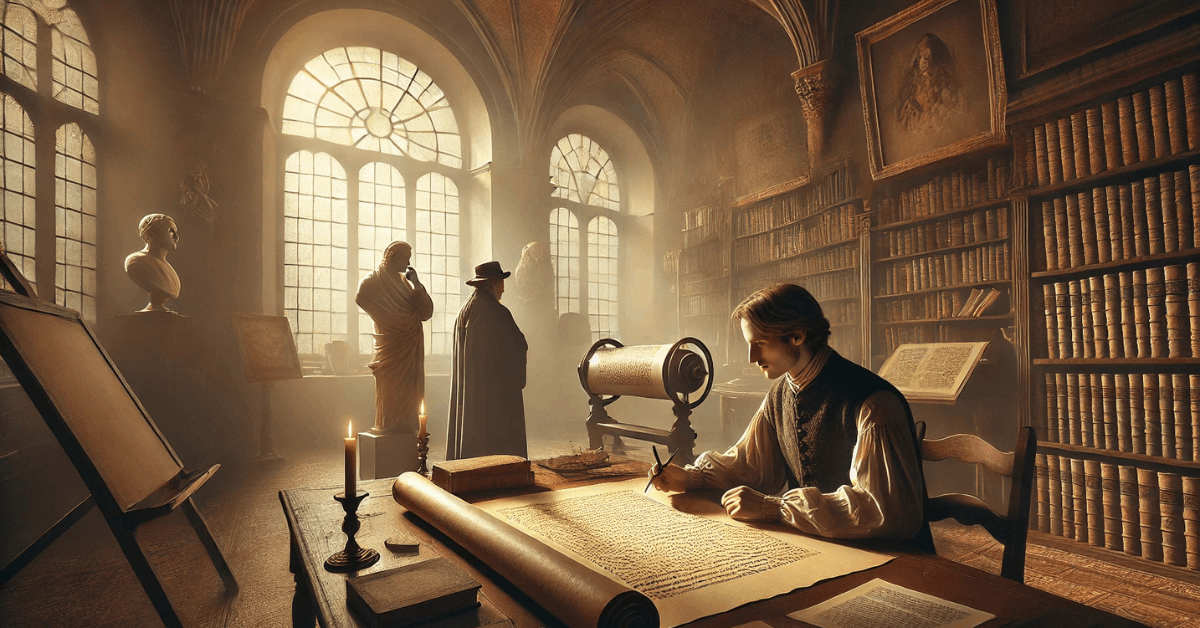
Leonardo was left-handed, a fact noted by many of his contemporaries. Writing left to right with ink could smudge easily. By writing in reverse, he could avoid dragging his hand across the fresh ink.
This method would have kept his notes cleaner and easier to review. Historians call this the most practical theory. It matches his habits and lifestyle.
His left-handedness was so notable, the Italian term "mancino" often referred to him. Many experts believe this was the real reason behind the habit.
Theory 3 – Mental Discipline
Another theory is that mirror writing helped Leonardo think more clearly. Reversing each letter required focus. It may have slowed his thoughts just enough to allow deeper reflection.
Some compare it to a modern form of mindfulness. Writing slowly can improve retention and reasoning. By doing this, Leonardo may have trained his mind to stay sharp.
It also explains why his private thoughts were written this way, not public works. It was a tool for internal clarity.
Theory 4 – Language Rebellion
One lesser-known theory is that Leonardo questioned the rigidity of language. A blogger once proposed that he rejected the idea of left-to-right writing. He may have seen mirror writing as a challenge to norms.
This theory positions him as a non-conformist. It’s unclear if this was ever his intent, but it fits his creative profile. Leonardo questioned systems in art, science, and anatomy—language could be no exception.
Still, this theory lacks direct proof. It’s an interesting angle, but speculative.
Was It Actually a Code?
Some people assume Leonardo used mirror writing to encode messages. This section looks at whether that claim holds up. The answer is more practical than mysterious.
Mirror Writing Vs. True Ciphers
True ciphers are designed to obscure content. Mirror writing is not. Anyone with a mirror can read it.
So, while it looks secretive, it lacks true complexity. Leonardo never used real cryptography. When he wanted to hide things, he used other techniques.
Mirror writing was too easy to reverse. Experts rule out the idea that it was meant as a secure code.
When He Didn’t Use It?
Leonardo didn’t always write in mirror text. He used normal writing for letters and public documents. That shows he wasn’t trying to confuse readers.
He used mirror writing mostly in his personal notebooks. This suggests he didn’t see it as a barrier. Instead, it was more likely a habit or practical choice.
He switched methods based on the audience. That weakens the secrecy theory further.
Modern Scientific Insights on Mirror Writing
Their findings help explain why Leonardo may have used it so naturally. These insights highlight the brain's role in motor control and handedness.
- Left-handed people tend to mirror write more, especially at an early age. This supports the idea that Leonardo’s dominant hand shaped his writing habit.
- Brain injuries or disorders can lead to temporary mirror writing. These cases show how the brain's motor and language functions affect direction.
- Research shows mirror writing is not always linked to disorders. It can be a natural brain response to space and language processing. Leonardo’s habit reflects what modern studies observe in left-handed writers.
Other Famous Mirror Writers
Leonardo wasn't the only person to use this technique. Others used mirror writing for different reasons. One notable figure was Lewis Carroll.
Lewis Carroll’s Case
Lewis Carroll, author of Alice’s Adventures in Wonderland, used mirror writing too. In his sequel Through the Looking Glass, Alice reads a backward poem. The famous "Jabberwocky" text had to be read with a mirror.
Carroll used it for novelty and reader engagement. He reportedly wanted to mirror more of the book, but editors stopped him. For Carroll, mirror writing was about fun, not secrecy.
This contrasts with how Leonardo used it. But it shows the method wasn’t unique to da Vinci.
Final Thoughts from Experts
Experts have explored many reasons why Leonardo used mirror writing. No single explanation covers every aspect. Most agree that multiple factors likely influenced the habit.
- Mirror writing started as a practical solution for Leonardo’s left-handedness. Writing right to left helped prevent smudging the ink as he wrote, a common issue for left-handers using quill and ink.
- Over time, the method became routine. It was used mostly in private notebooks and not in public writings, supporting the idea that it was a personal preference, not a security measure.
- Leonardo may have found creative value in breaking standard formats. Writing backward could have stimulated thought, maintained privacy, or simply done things differently.
These points show that mirror writing was more than just a quirky habit. It reflected both Leonardo’s practicality and his independent mindset.
Influence on Modern Culture and Art
Leonardo’s mirror writing still resonates in creative and educational fields. Many artists and museums recreate his mirrored notes to demonstrate his thought process.
These replications offer visitors a deeper connection to his work. Some modern designers use mirror writing for artistic experimentation.
Educators apply it to promote nonlinear thinking in problem-solving. The technique remains a useful way to explore unique cognitive strategies in classrooms today.
Conclusion – A Habit Born of Precision
Leonardo da Vinci definitely used mirror writing, and he did so consistently. While many theories exist, the most accepted reason is his left-handedness and a desire to avoid smudging.
Other ideas, like secrecy, rebellion, or mental training, may have contributed too. In the end, mirror writing wasn’t a code—it was a habit rooted in practicality and reinforced by genius.