

Japan’s tourism recovery is fueling nonstop hotel hiring across major cities and seasonal resort towns.
As the country targets over 60 million visitors annually, employers urgently need multilingual staff who can deliver top-tier guest experiences while handling tasks across front desks, housekeeping, and food service.



Japan’s Hospitality Boom Means Steady Hiring
Visa-free entries have resumed, flight capacity is climbing back toward 2019 levels, and the government’s tourism targets exceed 60 million annual visitors by the decade’s end.
Hotels, inns, and resorts, therefore, require multilingual staff who can greet guests, resolve issues, and demonstrate Japanese service standards in multiple languages.
Expect the most significant clusters of openings in metropolitan hubs—such as Tokyo, Osaka, Kyoto, and Yokohama—yet ski areas, hot-spring towns, and pilgrimage routes also post seasonal roles that add variety to your resume.
Match Your Goals to the Right Hotel Category
Choosing the right property type keeps you motivated and increases the odds of contract renewal. The lineup below highlights what each segment offers in terms of pay, teamwork, and language use.
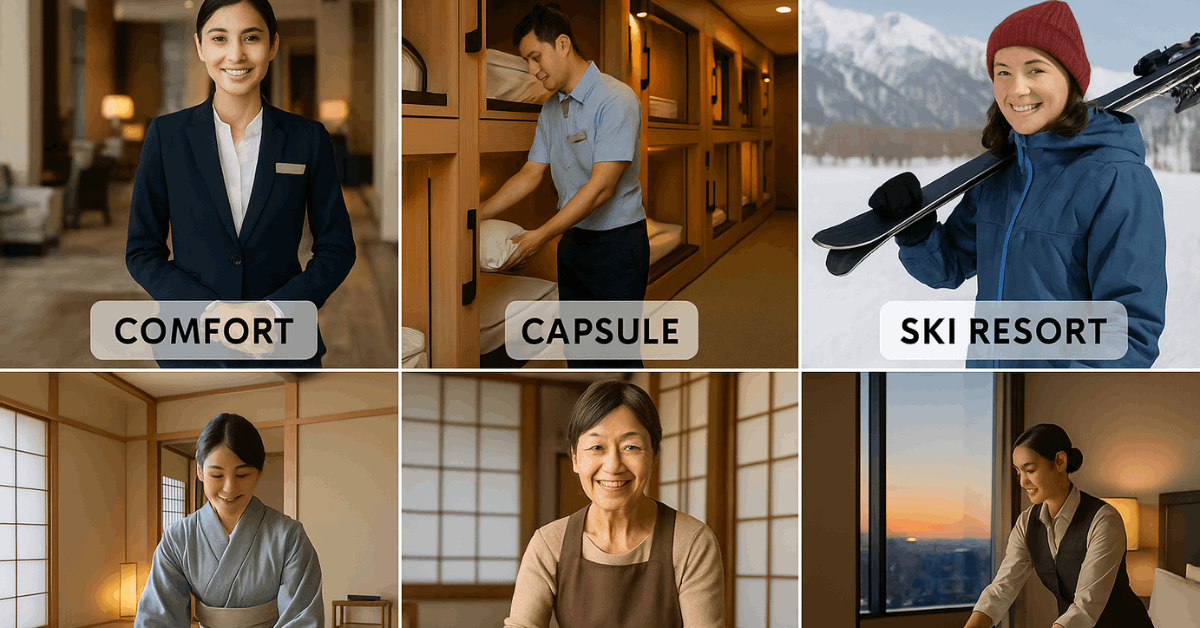
Comfort or Western-Style Hotels
You find these full-service brands—Hilton, Marriott, ANA InterContinental—in every major city.
Large rooms, 24-hour front desks, and international corporate guests drive the need for English and additional languages. Expect formal hierarchies, stable salaries, and clear promotion paths.
Business Hotels
Chains such as APA or Toyoko Inn prioritise affordable overnight stays for domestic and overseas professionals. Duties stay streamlined—check-in, billing, breakfast buffet monitoring—so you can master procedures quickly and move up.
Ryokan
Traditional inns deliver tatami rooms, kaiseki dinners, and onsen culture. Most staff members converse mainly in Japanese, yet top ryokans near Kyoto or Nara value bilingual concierges who enhance the satisfaction of foreign guests.
Minshuku
These family-run bed-and-breakfasts are often situated near spas or coastal towns. Housekeeping and meal service dominate daily tasks, and pay scales run lower; however, you gain close interaction with owners and an authentic regional experience.
Luxury Hotels
Five-star icons—such as Four Seasons, Aman, and Park Hyatt—pay premium wages and demand polished etiquette. Fluency in English plus conversational Japanese is the baseline, while additional languages raise your edge.
Ski Resorts
Niseko, Hakuba, and Nozawa Onsen hire globally for front desk, rental shop, and bar roles every winter. Housing is often included, and teams operate in English because of the international clientele.
Shukubo
Temple lodgings around Mount Koya attract spiritual travellers. Monastic routines guide schedules, and limited positions suit candidates already comfortable with Japanese and Buddhist customs.
Love Hotels & Capsule Hotels
Hourly accommodation and capsule pods centre on efficiency. Shifts revolve around housekeeping, vending-machine restocks, and discrete service, so conversational Japanese becomes essential.
Core Job Families and What They Involve
Selecting the correct department allows you to showcase your strengths rather than navigating a steep learning curve. The tiers below clarify daily tasks, required traits, and typical advancement tracks.
Management Path
- General Manager: Oversees revenue targets, staffing budgets, guest-experience scores, and compliance audits. Ten-plus years of hospitality leadership or an international MBA accelerate entry.
- Vice Director: Coordinates large-group contracts, resolves escalated complaints, and mentors departmental heads, acting as the GM’s second-in-command.
Aligning your training choices with management goals steers you toward success and fast-tracks future promotions.
Front-Of-House Roles
Direct guest contact positions sharpen your language ability and provide quick feedback on performance.
| Role | Key Duties | Must-Have Skills |
| Receptionist | Handle check-in/out, upsell room upgrades, update reservation systems | Polite multilingual communication; POS familiarity |
| Back-Office Clerk | Manage HR forms, vendor invoices, inventory reconciliation | Spreadsheet accuracy; Japanese business writing |
| Concierge | Arrange transport, tickets, dining; solve last-minute issues | Local knowledge; calm under pressure |
| Bellhop | Escort luggage, guide guests to amenities | Physical stamina; basic English greetings |
Housekeeping Roles
Attention to detail and time management translate into consistent guest satisfaction scores.
- Room Attendant – Clean, reset, and sanitise rooms within strict time slots.
- Laundry Supervisor – Operate washers, press linens, and monitor chemical levels.
Food & Beverage Team
Culinary and beverage positions enhance guest experiences and often offer tipping opportunities.
- Food & Beverage Manager – Control menu pricing, vendor contracts, and hygiene audits.
- Executive Chef – Design menus, train cooks, and enforce plating standards.
- Waitstaff – Serve dishes, explain allergen information, and process POS payments.
- Sommelier – Curate wine cellar, lead pairing events, boost bar revenue.
- Bartender – Mix classic cocktails, craft signature drinks, and maintain stock levels.
Understand Residence Status Options Before Applying
Securing the proper visa keeps your employment legal and stress-free. Requirements differ by job content rather than employer type, so match tasks precisely.
Engineer / Specialist in Humanities / International Services (ESI)
This category suits front-desk or marketing roles demanding bilingual communication and cross-cultural problem-solving. A university degree—or three to ten years of validated experience—remains mandatory.
Designated Activities No. 46
Graduates from Japanese universities who fall outside ESI parameters may qualify, provided they hold JLPT N1 or BJT 480+ certification. Use this route if your primary duties span multiple departments.
Specified Skilled Worker (SSW)
Hotels can hire you under the accommodation sector SSW for front office, planning, sales, or restaurant service. Two levels exist:
- SSW (i) – Renewable up to five years, no family accompaniment.
- SSW (ii) – Unlimited stay, leadership scope, dependent sponsorship allowed.
Kitchen-centric cooks need the separate cooking SSW, not accommodation SSW.
Part-Time Work for International Students
Permission for activities outside status lets you earn up to 28 hours weekly (full-time during long vacations). Many resorts schedule flexible evening or weekend shifts that fit class timetables.
Step-By-Step Roadmap to Securing Your Position
Following a proven sequence eliminates paperwork surprises and speeds your start date.
- Research and Apply
Use Hello Work, multilingual job boards, or specialist staffing firms. Tailor your resume toward service achievements and language proficiency. - Ace the Interview
Arrive early, bring printed CV copies, and prepare brief anecdotes showing guest-problem resolution. Maintain eye contact and respectful bowing angles. - Handle Immigration Paperwork
Upon receiving an offer, file the correct change-of-status or certificate-of-eligibility documents at your local Immigration Services office. Double-check you include the hotel’s employment letter and your qualification proofs. - Complete On-Site Training
Orientation covers emergency protocols, POS software, and brand etiquette. Keep a notebook ready, confirm tasks back to trainers, and request clarifications the moment confusion arises.
Interview and Onboarding Tips You Can Practice
You strengthen first impressions and integrate faster when you adopt the habits below:
- Learn at least twenty hospitality-specific Japanese phrases—think room types, billing explanations, and polite apologies.
- Practice keigo (honorific language) for phone calls, as many reservations still arrive via voice.
- Maintain neat grooming: conservative hairstyle and minimal jewellery align with most brand manuals.
- Review the property’s online reputation beforehand; propose one realistic improvement during the interview.
- Pair eye contact with a 30-degree bow when greeting seniors or VIP guests.
Conclusion
Hotel careers in Japan reward multilingual professionals with steady demand, cultural immersion, and pathways from entry-level service to executive management.
By selecting a property type that fits your lifestyle, aligning visa status with job duties, and mastering interview etiquette, you position yourself for long-term success in one of the world’s most respected hospitality markets.