
Japan’s cleaning industry faces a labor crunch that works in your favor.
With rising tourism, strict hygiene codes, and an aging local population, thousands of entry-level jobs remain open each year, offering stable income, flexible hours, and fast-track hiring for anyone ready to step in.



Demand Drivers That Keep Vacancies Open
Japan’s shrinking workforce, coupled with record tourism and strict sanitation codes, leaves thousands of positions unfilled each year, allowing motivated newcomers to secure stable roles quickly, often without experience.
Labor Shortage Linked to Demographics
An aging domestic population limits the number of local applicants, so companies raise wages and streamline visa sponsorship to attract foreign talent, giving you stronger bargaining power.
Tourism and International Events
Hotels, airports, and event venues in Tokyo, Osaka, Fukuoka, and other major hubs schedule deep cleaning rotations around the clock, generating consistent part-time and full-time openings that welcome applicants worldwide.
Core Job Categories and What Each Entails
A clear picture of daily tasks and shift patterns helps you target roles that fit your lifestyle and language level.
Hotel Room Attendant:
- Primary duties: Strip and remake beds, sanitize bathrooms, restock amenities, and report maintenance issues.
- Typical shift: 09:00–15:00, allowing evening free time or a second job.
- Pay range: ¥1,000–¥1,500 per hour in large cities, slightly lower in rural prefectures.
- Language needs: Basic greetings and room-status codes; many hotels train on the job.
Factory Hygiene Crew:
- Primary duties: Sweep and mop production floors, wipe machinery, handle waste segregation under safety rules.
- Typical shift: Fixed eight-hour blocks, with night shifts paying premiums up to 25 percent.
- Pay range: ¥1,100–¥1,600 per hour, rising for chemical or food plants that require stricter protocols.
- Language needs: Ability to read pictogram safety labels and follow supervisor instructions.
Office Caretaker:
- Primary duties: Vacuum carpets, dust workstations, empty bins, and disinfect restrooms after business hours.
- Typical shift: Early morning (05:00–08:00) or late evening (19:00–22:00), giving you daytime freedom.
- Pay range: ¥1,000–¥1,400 per hour depending on floor area and location.
- Language needs: Minimal conversation; written task sheets are common.
Public-Space and Event Cleaner:
- Primary duties: Keep malls, stadiums, and parks spotless, manage recycling stations, and reset venues between shows.
- Typical shift: Variable; expect peak demand on weekends or festival days.
- Pay range: ¥950–¥1,300 per hour, plus overtime supplements for large events.
- Language needs: Simple Japanese phrases for lost-and-found or guest directions.
Salary Benchmarks at a Glance
A quick comparison highlights realistic earning expectations across regions.
| Region | Entry Hourly Rate | Experienced Hourly Rate |
| Tokyo | ¥1,250 | ¥1,600 |
| Osaka | ¥1,100 | ¥1,450 |
| Nagoya | ¥1,100 | ¥1,300 |
| Sapporo | ¥900 | ¥1,200 |
| Kyoto | ¥950 | ¥1,300 |
Figures reflect mainstream postings on GaijinPot and Hello Work as of Q2 2025; high-rise window cleaning and specialized sanitation can exceed these ranges.

Eligibility Essentials That Boost Your Hire Rate
Securing interviews becomes easier once you meet the baseline criteria below.
- Valid Work Visa – The Specified Skilled Worker (SSW) or Student visa with permit for 28 hours weekly suits most entry roles.
- High-School Diploma – Not mandatory nationwide, but many agencies list it as preferred.
- Conversational Japanese (JLPT N5–N4) – Enough to follow instructions and safety signs; language schools often partner with employers.
- Willingness to Learn – Supervisors look for punctuality, attention to detail, and steady output more than perfect grammar.
Visa Pathways Made Simple
You can speed up processing by aligning your application with the visa category that matches the type of work you do, such as cleaning.
Specified Skilled Worker (i)
This track covers building cleaning under the “Building Cleaning” industry code, lets you stay up to five years, and requires a skills exam plus a basic Japanese test—both offered worldwide at approved centers.
Student Visa With Part-Time Permission
Language students can legally work twenty-eight hours weekly and up to forty hours during long vacations, giving you a practical way to fund tuition and living costs until you graduate or switch to full-time employment.
Which Employers and Agencies are Actively Recruiting
Targeting reputable firms accelerates response times and minimizes paperwork headaches.
National and Multinational Facility Managers:
- Duskin Co., Ltd. – Runs housekeeping, office, and industrial cleaning crews nationwide, and offers structured training programs.
- ISS Facility Services Japan – Hires for corporate campuses, airports, and public complexes, often bundles accommodation.
- OCS Group Japan – Specializes in high-security sites that demand strict background checks but pay premium rates.
Residential and Housekeeping Specialists:
- Pinay Housekeeping Service – Operates in Tokyo and Kanagawa; frequently seeks bilingual staff, hourly pay starts at ¥4,070.
- Sunny Maid Service – Covers Tokyo, Osaka, Hyogo, and Kanagawa; one-hour minimum jobs make schedules flexible.
- Kurashinity (Pasona Group) – Focuses on the Tokyo-Yokohama corridor, includes trial shifts and a hotline for foreign workers.
- Taskaji Platform – A marketplace where you negotiate directly with clients; rates begin around ¥1,500 and rise with reviews.
- CaSy – Online-first platform spanning Miyagi to Kyoto; short shifts suit side-gig seekers.
- Smile Plus – Provides cleaning, childcare, and elderly support, good for applicants with care experience.
- Bears – Offers broad service packages, including party prep and garden work, and runs free consultations.
- Cat Hand – Tokyo-centered agency noted for bespoke schedules and 2.5-hour trial visits.
Each company welcomes worldwide applicants, although Tokyo-area offices tend to process paperwork more efficiently.
Digital Platforms and Local Channels That List Openings
A blended search strategy expands your options and reveals hidden job opportunities.
- GaijinPot Jobs – English interface, advanced filters for visa sponsorship and language level.
- JobsinJapan.com – Aggregates listings from national chains and smaller local firms.
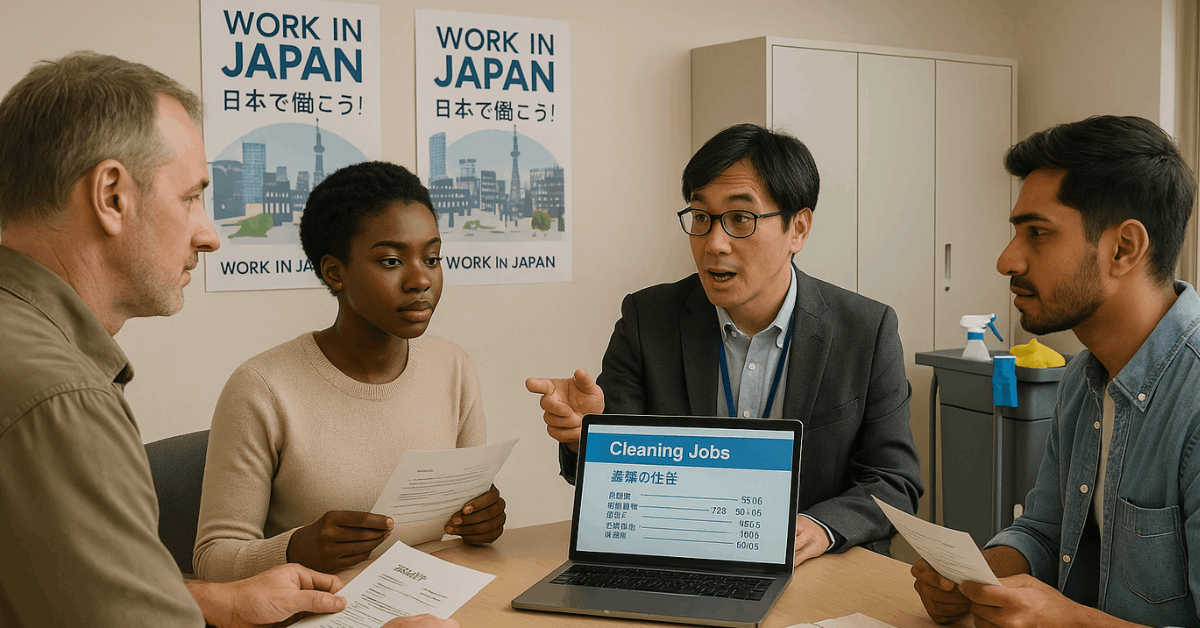
- Hello Work – Government employment centers offering free translation assistance; ideal for visa guidance.
- WORK JAPAN App – Mobile interface with a map view of nearby shifts that hire beginners.
- Community Boards – Supermarkets and convenience stores in central prefectures post simple ads for early-morning office cleaning.
Step-By-Step Roadmap to Landing Your First Contract
Following a systematic approach lowers rejection rates and shortens your timeline from search to start date.
- Define Role and Region – Compare hotel, factory, and office positions in two or three prefectures where the cost of living meets your budget.
- Craft a Job-Ready Résumé – Highlight stamina, punctuality, teamwork, and any cleaning or hospitality experience, even volunteer work abroad.
- Collect Key Documents – Secure passport, academic certificates, and the police certificate required for most visa filings.
- Upgrade Japanese Basics – Memorize industry-specific vocabulary, such as “souji” (cleaning), “gomi” (trash), and “kiken” (danger), and then practice your interview answers aloud.
- Apply Through Multiple Channels – Submit tailored cover letters on GaijinPot, register at Hello Work, and message agency recruiters directly on LINE.
- Attend Interviews Promptly – Arrive ten minutes early, bring copies of your ID and resume, and demonstrate a thorough understanding of the company’s service areas.
- Negotiate Contract Terms – Confirm hourly wage, shift schedule, paid leave, uniform fees, and transportation allowance before signing.
- Process Visa and Health Check – Hand in Certificate of Eligibility forms, then complete the medical exam, which is often required for hotel or food-factory roles.
- Complete Initial Training – Study chemical dilution ratios, equipment maintenance, and emergency procedures to build trust quickly.
- Request Feedback Regularly – Managers value proactive communication; minor performance tweaks now can unlock raises within six months.
Practical Tips for Day-To-Day Success
Consistent habits safeguard your health and reputation while you adapt to Japanese workplace culture.
- Rotate muscle groups during repetitive tasks to avoid strain and maintain long-term productivity.
- Label personal cleaning tools in katakana and English to prevent mix-ups in shared storage rooms.
- Use smartphone translation apps for quick clarification of supervisor instructions without interrupting workflow.
- Track shift hours and overtime in a simple spreadsheet to ensure your payslip accurately reflects logged time.
- Respect silence during commuter hours and break rooms; quiet professionalism is widely appreciated.
Conclusion
Acting decisively on the steps above positions you to secure a reliable cleaning job in Japan within weeks, tap steady income streams, and build long-term career options all while meeting the country’s pressing need for dedicated hygiene professionals across residential, commercial, and industrial settings.